トップページ >
English
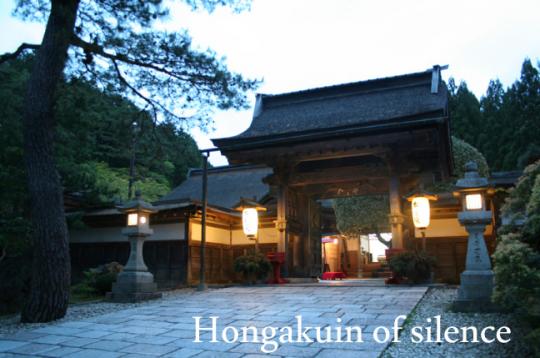
A Sacred Retreat in the Heart of Koyasan
Hongaku-in is a traditional Buddhist temple lodging (shukubo) located in the sacred mountains of Koyasan, Japan.
According to temple tradition, Kobo Daishi Kukai, the founder of Shingon Buddhism, carved and enshrined Jizo Bodhisattvas at this very place. It is said that the area then became filled with sacred light and was regarded as one of the holy places of Koyasan.
About 900 years ago, a Buddhist monk came to this sacred site and continued praying and reciting sutras here. One day, a glowing Jizo Bodhisattva appeared before him and said, “Live here.”
The monk then built a temple on this site, which became the beginning of present-day Hongaku-in.
Today, guests from around the world can stay at the temple and experience the peaceful atmosphere of Koyasan and traditional Japanese Buddhist culture.
Morning prayer services and a Dharma talk by the head priest are held every day, and overnight guests are welcome to join freely.
Hongaku-in is a traditional Buddhist temple lodging (shukubo) located in the sacred mountains of Koyasan, Japan.
According to temple tradition, Kobo Daishi Kukai, the founder of Shingon Buddhism, carved and enshrined Jizo Bodhisattvas at this very place. It is said that the area then became filled with sacred light and was regarded as one of the holy places of Koyasan.
About 900 years ago, a Buddhist monk came to this sacred site and continued praying and reciting sutras here. One day, a glowing Jizo Bodhisattva appeared before him and said, “Live here.”
The monk then built a temple on this site, which became the beginning of present-day Hongaku-in.
Today, guests from around the world can stay at the temple and experience the peaceful atmosphere of Koyasan and traditional Japanese Buddhist culture.
Morning prayer services and a Dharma talk by the head priest are held every day, and overnight guests are welcome to join freely.
Surrounded by ancient forests and a deeply peaceful atmosphere, Hongaku-in offers a space to slow down, reflect, and reconnect with a quieter sense of self.
For room details and availability, please visit the accommodation page.
Main Hall (本堂)
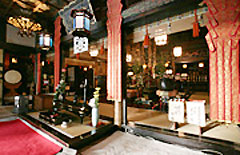
Hongakuin is a sub-temple of Kongobuji, the head temple of Koyasan Shingon Buddhism, and serves as a temple of special rank (bekkaku honzan) .
The principal image enshrined here is a venerable statue of Fudo Myoo (Acala).
The principal image enshrined here is a venerable statue of Fudo Myoo (Acala).
Access (アクセス)
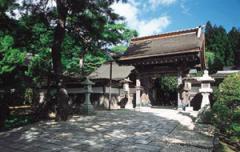
From Koyasan Station, take the Nankai Rinkan Bus bound for "Oku no In" or "Daimon-yuki" and get off at the "Police station" bus stop (approximately 10 minutes by bus). From the bus stop, it is a 2–3 minute walk to the temple gate, along a tree-lined path that draws you into a world of tranquil stillness.
Ceiling Paintings of the Main Hall (本堂天井絵)
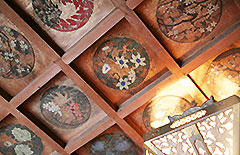
Precious ceiling paintings from the Edo period, still vivid in color.
Each individually crafted panel designed with meticulous attention to artistic detail is a defining feature of Hongakuin's main hall. The rich colors have been preserved for over 250 years since the temple's founding.
Each individually crafted panel designed with meticulous attention to artistic detail is a defining feature of Hongakuin's main hall. The rich colors have been preserved for over 250 years since the temple's founding.
Grand Hall & Kano School Fusuma Paintings (大広間・狩野派の襖絵)
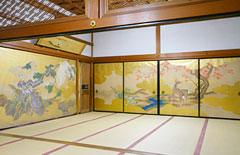
You can view precious fusuma paintings by Kano school artists who resided here during the Edo period.
The grand hall, steeped in rich historical narrative, is also used for banquets following Buddhist ceremonies. As dusk falls, you can experience the play of shadow and light and the gentle passage of time.
The grand hall, steeped in rich historical narrative, is also used for banquets following Buddhist ceremonies. As dusk falls, you can experience the play of shadow and light and the gentle passage of time.
Pond Garden (池泉庭)
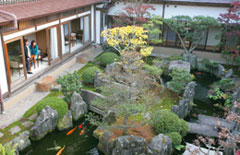
The pond garden(Ikesen-tei) is one of Hongakuin's five gardens. The formal beauty of its design can be appreciated in every corner, with scenery that changes through the four seasons. The sound of water flowing through the stillness, birdsong, and the chirping of insects will soothe your heart.
The Stone Garden and Tea House by Shigemori Mirei (重森三玲の石庭と茶室)
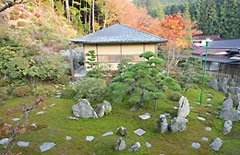
The moss garden dates from the early Showa period and was created by landscape artist Shigemori Mirei.
Designed to be appreciated while walking along the corridor, the complex arrangement of stones creates an optical illusion of lateral movement, and even a sense of moving up and down. Overlooking this garden stands a detached tea house.
.jpg)
Greeting from the Head Priest
To all our visitors, we sincerely hope this finds you in good health and high spirits. It has been half a century since I first devoted myself to the service of the Buddha and Kobo Daishi. Even now, I spend my days in self-reflection, asking myself: Am I worthy as a monk and as a member of the order? Have I strayed in my conduct? Today, each monk of Koyasan is called upon to examine his own qualities and resolve. What does it mean to carry oneself as a monk? It is my wish to embody that example—to correct hearts clouded by worldly desire, to uphold the precepts that form the foundation of monastic life, and to spread the spirit of selfless service to all beings, as taught by Kobo Daishi. Yet nothing can be achieved by one person alone. With the support of all of you, I hope to safeguard the dharma-flame of Hongakuin, foster the growth of Koyasan Shingon Buddhism, and put into practice the salvation of all beings that Kobo Daishi taught. With this, I offer my heartfelt greeting.
Profile of the Head Priest
●1945 — Born in Fukuoka Prefecture
●1954 — At age 9, suffered peritonitis from a misdiagnosis and hovered between life and death. While unconscious, his father prayed to Kobo Daishi, vowing, "I offer my son to Koyasan; please spare his life." The next day, he made a miraculous recovery.
●1960 — Age 15, entered Koyasan
●1967 — Age 22, graduated from Koyasan University, Department of Esoteric Buddhism; received the President's Award
●1974 — Age 29, appointed head priest of Saishoin, Koyasan
●1980 — Served in various department-head positions at Kongobuji, Koyasan
●1998 — Age 53, served as supervisor of the Hoju-in Training Academy at the Daihonzan, Koyasan; directed Shomyo (Buddhist chant) instruction for two terms over eight years. Each year he guided roughly 80 monks—some 640 in total—providing thorough instruction in Nanzan Shinryu shomyo.
●2005 — Appointed Gon-daisojo (a high clerical rank)
●2010 — Appointed head priest of Hongakuin, a temple of special rank, Koyasan
●2013 — Appointed Director of Shingon Buddhist Ceremonies at Kongobuji, Koyasan
In addition, he serves concurrently as head priest of temples across Japan, and has held numerous important posts both within and beyond the sect, including member of the Koyasan Shingon Sect Assembly and representative of the Koyasan Head Priests' Assembly.
Special Edition Shomyo CD Now Available
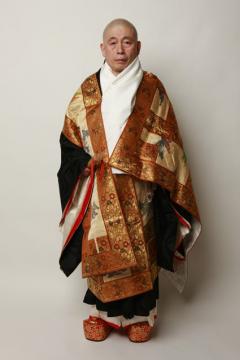
We are pleased to announce that Victor Entertainment has released a CD of solo shomyo (Buddhist liturgical chant) performed by Hoken Inaba, head priest of Hongakuin, a temple of special rank on Koyasan.
Exclusively at Hongakuin, we offer a special two-disc CD edition.
We hope that, through these distinctive chants of the Nanzan Shinryu tradition, you may be reminded of the devotions practiced on the sacred mountain of Koyasan.
Temple Lodging (Shukubo)
Let the sacred mountain of Koyasan ease the weariness of body and mind. May you leave feeling lighter in heart and spirit, ready to face tomorrow anew—it is our sincere wish to help you find that renewal.
All of our rooms are clean and beautifully maintained, newly built or recently renovated. Each looks out onto gardens that shift gently with the seasons, offering a tranquil space to rest and unwind. Should anything be lacking during your stay, please do not hesitate to let us know
Guest Rooms
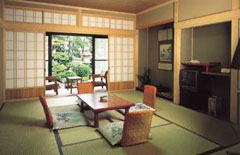
Quiet Japanese-style (tatami) rooms surrounded by gardens. Every room is fully equipped with air conditioning, heating, and a television for your comfort throughout your stay.
Please note that some areas have steps. If you need any assistance, please feel free to let us know.
Please check this page for room photos and pricing details.
Please check this page for room photos and pricing details.
Traditional Buddhist vegetarian cuisine
We prepare shojin-ryori, the Buddhist temple cuisine handed down on Koyasan for over twelve hundred years, with the utmost care.
Shojin-ryori is a traditional Buddhist vegetarian cuisine that uses no meat or fish of any kind. The word shojin means wholehearted devotion to the Buddhist path, and the cuisine is rooted in the principle of non-harming ,or ahimsa—a reverence for all living beings. Each dish is prepared mindfully as part of spiritual practice, so that the act of eating itself becomes a form of prayer and a quiet meditation.
Featuring seasonal local ingredients and specialties such as koya-dofu (freeze-dried tofu) and goma-dofu (sesame tofu), each course is crafted to draw out the natural essence of its ingredients. Served in the temple hall, this simple yet nourishing meal—eaten in stillness—restores not only the body but also brings clarity to the mind.
Bath
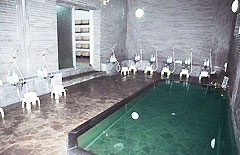
Large and medium-sized communal baths where you can fully relax,
with amenities provided.
with amenities provided.
Toiletries: body soap, shampoo, conditioner, hair dryer
Towels: bath towel, face towel, toothbrush set
★ Bath types: Large bath / Medium bath
★ Available hours: 17:00–21:00